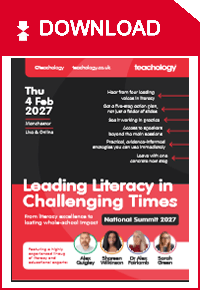
Leading Literacy in a Post-Literate Age
Alex Quigley Education Consultant, Author and TES columnist, former Head of Content, EEF / Director of Huntington Research School
Three pressures, one challenge to address. Alex opens the day by naming what’s genuinely shifting in literacy leadership: talk in an age of technology, writing in an age of AI, and reading in an age of post-literacy. Rather than treating these as separate crises, the keynote frames them as one leadership challenge – and introduces the five-step model (Address, Observe, Support, Select, Monitor) that structures the rest of the day.
Leading Literacy for a Strong Start: Disciplinary Literacy in Primary Schools
Shareen Wilkinson Chief Education Officer at LEO Academy Trust, education consultant and author of Disciplinary Literacy
What does it mean to read, write and talk like a historian, scientist or geographer – from Reception onward? Drawing on her book, Disciplinary Literacy in Primary Schools, Shareen sets out how primary leaders can move disciplinary literacy from an add-on to a whole-curriculum expectation, with a bridge into what this looks like, and why it matters just as much, for secondary colleagues.
Leading Literacy to Develop Language: Scaffolding Oracy in Every Classroom
Dr Alex Fairlamb Educational consultant and Trust T&L Coach
Oracy is often talked about but rarely scaffolded with purpose and precision. Dr Alex, co-author of The Scaffolding Effect, brings the research on cognitive science and adaptive teaching to bear on spoken language specifically – practical scaffolds that move pupils from novice to confident, articulate communicators, in every subject and phase.
Leading Literacy: Turning Plans into Action
Sarah Green Education consultant, Trust Director of Literacy, former EEF Content Specialist and author of Leading Literacy: What Every School and Trust Leader Needs to Know
The best literacy strategy is only as good as its implementation. Sarah, author of Leading Literacy, opens the taught sessions with the leadership mechanics that make literacy stick: assessment that actually informs practice, realistic implementation planning, and how to build and sustain a genuine whole-school literacy culture rather than a policy that sits on a shelf.
Case studies, throughout the day
Themed literacy case studies show this leadership work in practice: real schools and trusts on talk and technology, disciplinary literacy, oracy, and implementation and culture.
Planning Session: Building Your Literacy Action Plan
Alex Quigley
The day closes with time to think, not just listen. Using the fivestep model as a scaffold, delegates draw together everything they’ve heard to leave with a completed, personalised action plan – including one concrete step to take within weeks to transform your literacy strategy.